

Old cubicles have four realistic exits: reuse them in a new layout, resell or liquidate them, donate them, or have them disassembled and recycled. Which one fits comes down to the age and condition of the panels, how many matching stations you have, and how much time you have before the floor has to be clear. Reuse is usually the cheapest of the four, and resale value on used cubicles is generally lower than owners expect.
Decommissioning is the facilities word for the whole job: clearing the space, deciding where every piece goes, and getting the floor back to the condition your lease calls for. Removal is one step inside it, and it's the step that tends to get booked last and cost the most when the other decisions were skipped.
What Old Cubicles Are Actually Worth
This is the question most owners want answered first, and the honest answer is usually "less than you'd think."
The used office furniture market is selective. Value concentrates in a few things: systems from lines still in production, large quantities of matching stations, clean fabric and laminate, and panels that come apart without damage. A floor of forty matched stations from a current line is a real asset. Twelve mixed stations from a discontinued system in three fabric colors usually sell for scrap value at best.
The reason is labor. Someone has to take the system down carefully, sort the parts, load them, store them, and then find a buyer who wants that exact configuration. That work often costs more than the resale price it produces, which is why liquidators tend to quote the job net of their labor. A sale can still come back as a bill, and that surprises people.
Two things move the number in your favor: quantity and condition. If you have both, ask about resale before you book anything else.
Donate, Recycle, or Landfill
Once resale is off the table, the remaining paths each have a real cost and a real requirement.
Donation works when the furniture is genuinely usable and someone can move it. Schools, churches, nonprofits, and new small businesses take office furniture, but most want complete matched stations rather than partial systems, and most cannot send a crew. You are typically still paying for disassembly and transport. If you plan to claim the donation, your accountant sets the valuation, not the receiving organization.
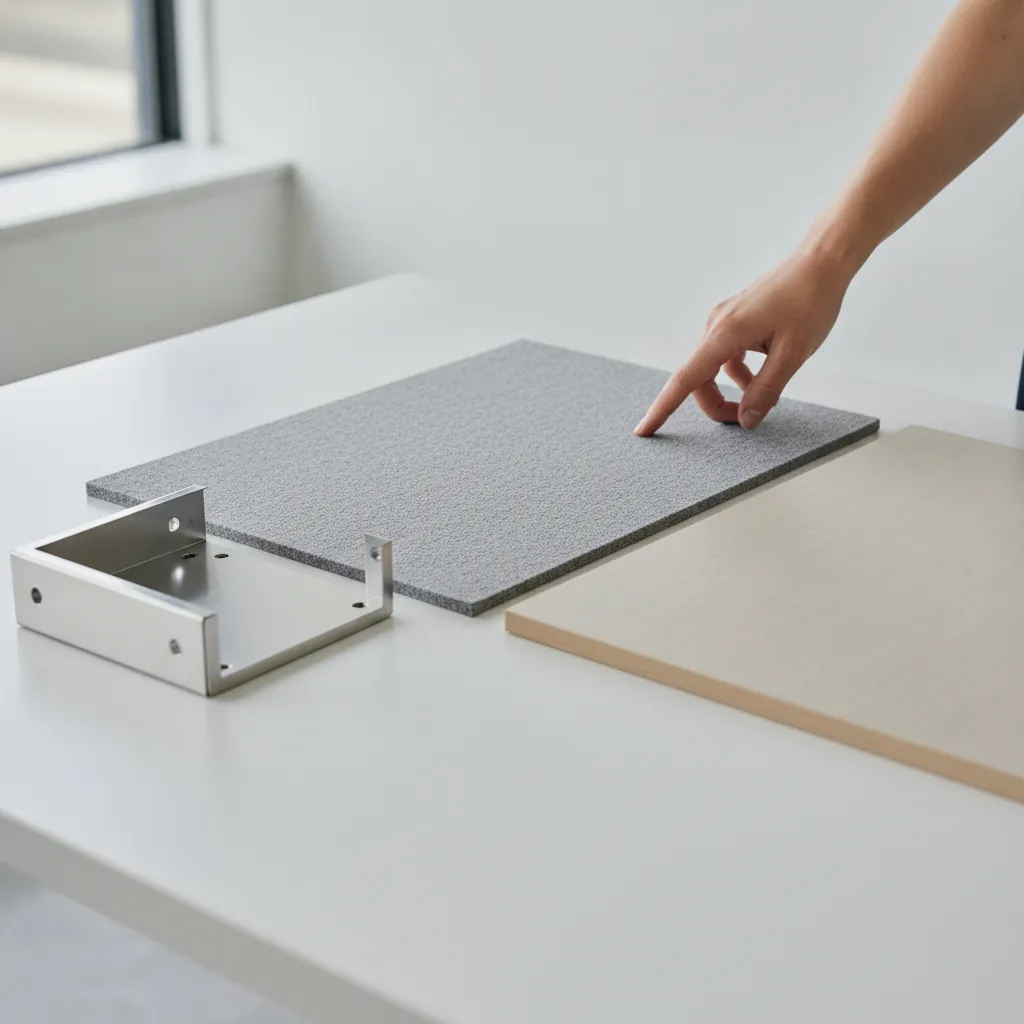
Recycling is where most of a cubicle actually ends up. Steel frames, aluminum trim, and metal brackets are the parts with scrap value and an easy path. Our own teardown guide points the same direction: wood, iron, and aluminum can be recycled at a local facility. The harder pieces are the fabric-wrapped panels and the particleboard work surfaces, which are mixed materials and usually have to be separated before anything can be recycled at all. Our notes on keeping office furniture out of the landfill cover that side in more detail.
Landfill is the last resort, and it's also the default when the schedule gets short. Every week you leave between the decision and the move-out date is a week where donation and recycling stay on the table. Book late and disposal makes the choice for you.
When Reconfiguring Beats Removing
Before you price removal at all, price the alternative, because panel systems were built to be taken apart and rearranged.
Reconfiguration reuses the frames, panels, and work surfaces you already own in a different footprint. It's the cheapest option per seat, there's no manufacturing lead time attached to it, and nothing has to leave the building or get disposed of. If your problem is that you have thirty stations and now need eighteen larger ones, or that the layout no longer matches how the team works, reconfiguration often solves it for a fraction of replacement.
It's also the fastest way to handle a downsizing. Reuse what fits the new plan, and only the surplus stations need an exit strategy.
Where it stops making sense: panels from a discontinued system where replacement parts and connectors are no longer available, fabric that's past its life, or a plan that needs power and data in places the old system can't reach. Checking standard cubicle dimensions against your new floor plan early tells you quickly which side of that line you're on.
Rochester Office Interiors offers full reconfiguration services, which exist for exactly this: making the most of furniture you've already paid for, whether you're expanding, downsizing, or updating.
"I highly recommend Rochester Office Interiors to any business that requires new installations or modifications to existing set-ups."
John and Nicole Moore
Who Does the Work: Junk Hauler, Furniture Dealer, or Mover
Three different companies will quote this job, and they're built for three different outcomes.
A junk removal service is priced to make things disappear. It's fast, it's usually the cheapest way to empty a floor, and it's the right call when the furniture is genuinely finished. It's also built for speed rather than salvage, so anything reusable tends to come apart the quick way and leaves with everything else.
An office furniture dealer or installer knows the system, because they install it. They can take it down without destroying the parts that still have value, tell you honestly which stations are worth keeping, and sequence the teardown around the new install. That matters most when any of it is being reused, resold, or reconfigured.
A commercial mover is the right answer when the furniture is relocating rather than leaving. Movers are set up to protect and transport furniture that's going somewhere.
Plenty of projects use two of them: a dealer handles the stations being reused and reconfigured, and a hauler clears whatever is left.
What Cubicle Removal Costs and What Drives the Price
Removal is quoted, not listed, because almost every variable is about your building rather than your furniture.
What moves the number: how many stations there are, the panel height and system type, whether disassembly is included or expected to be done already, what floor you're on and whether there's a freight elevator, how far the carry is to the loading dock, whether the building requires certificates of insurance or after-hours work, disposal and tipping fees in your area, and how much of the furniture is salvageable enough to offset the labor.
The two that surprise people most are building access and timing. A ground-floor suite with a dock is a straightforward job. A fourth-floor office with one shared elevator, a building that only allows moves after 6pm, and a hard move-out date is a different quote entirely, for the same furniture.
Sequencing Removal Around a New Install
If new furniture is coming, the order of operations is the part worth getting right, because both ways of getting it wrong are expensive.
Pull the old stations too early and your team has nowhere to sit while the new order is still in production. Leave them too late and the install crew arrives to a floor they can't work on, which usually means a return trip that you pay for.
A sequence that holds up: confirm the delivery and install date for the new furniture first, then book the removal window against it, then read your lease's condition-on-surrender clause before either one, since that's what decides how clear "clear" has to be. Building access and the freight elevator get reserved early, because in most commercial buildings that calendar fills before yours does. If the space is being handed back, confirm what the landlord expects to find, in writing.
What to Handle Before the Crew Arrives
A short list that keeps removal day from stalling:
- Empty every pedestal, overhead bin, and storage tower, and track down the keys. Locked drawers with unknown contents stop the job.
- Route anything holding data separately. Workstation computers, phones, and drives belong on an IT and e-waste path, not on a furniture truck.
- Get power disconnected properly. Panel systems are often hardwired into a base feed, and that side typically needs a licensed electrician rather than a removal crew.
- Photograph the layout from several angles if any of it is being reassembled, and label the parts as they come off. Our guide to how to disassemble office cubicles walks through the teardown itself.
- Clear the path and reserve the dock. Carry route, elevator, and parking are what actually set the pace of the day.
Rochester Office Interiors in Rochester, NY
Rochester Office Interiors is a family owned office furniture dealer in Rochester, NY, with more than 30 years in the business. Andy Draveck and the team come at this from the install side. Andy started his career in 1991 as an installer, which is a useful background for a decommissioning conversation, because the person who put systems like yours together knows what comes apart cleanly and what doesn't.
The work covers reconfiguration, planning and installation, with an in-house interior design team, and the company assists with cubicle setup and removal. If the plan involves replacing what's coming out, new workstations and cubicles get specified against the same floor plan, so the removal and the install are working from one drawing.
"They helped us immensely with finding quality furniture & cubicles that fit our budget and needs."
Joseph Pecoraro
If you're clearing or replacing cubicles in the Rochester area, ask for a quote or call (585) 749-2428. We'll look at what you have, what's worth keeping, and what the new layout needs before anything gets scheduled.
FAQ
Do I have to disassemble the cubicles myself?
Usually not. Most removal quotes include teardown, though some price it as an add-on, so confirm which you're getting. Doing it in-house makes sense mainly when the stations are being reused and you want the parts handled carefully.
Can I sell used cubicles myself?
You can, and it works best with a large matched set from a current line, in good condition, listed with clear photos and the manufacturer and model. Expect to handle disassembly, loading, and a buyer's schedule yourself, and price in that time before deciding it beats a dealer or liquidator handling it.
How long does it take to clear a floor of cubicles?
It depends far more on access than on quantity. Building rules, elevator availability, and carry distance set the pace, which is why a dock-level space can clear in a day while the same furniture upstairs takes several.
What happens to the electrical whips and power poles?
They're part of the system and come out with it, but the disconnection from the building's supply is electrical work. Have that handled before removal day so the crew isn't waiting on an electrician.