
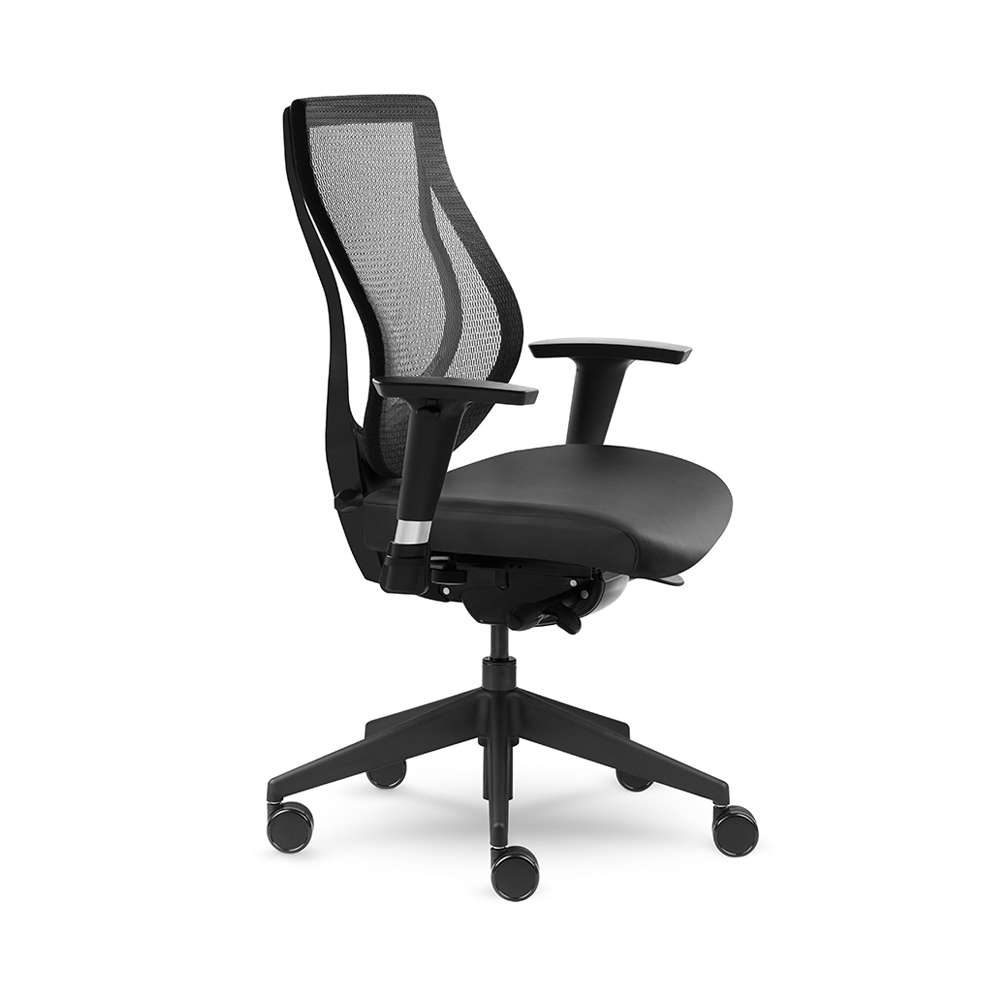
If your office chair slowly drops on its own a minute or two after you sit down, the chair is fine. The part that fails is the gas lift cylinder, the piston in the middle of the chair that raises and lowers the seat. When its internal seal wears out, it can no longer hold pressure under your weight, so the seat sinks. The good news, straight from our owner Andy Draveck: "You can replace the lift (gas cylinder) with a pipe wrench to remove it from the seat pan. Then tap the bottom of the lift to remove the 5-star base. No tools needed to install the replacement, they are pressure fit."
It is a genuinely doable repair, usually 15 to 20 minutes, and it costs a fraction of a new chair. Here is exactly how to do it.
Why the chair sinks in the first place
Inside that cylinder is compressed gas. Pressing the lever under the seat opens a valve, and the gas pressure raises or lowers you. Over years of use the seal that holds that pressure wears down. Once it leaks, the cylinder cannot support your weight, and the seat drifts to the bottom. Nothing else on the chair is worn out, which is why replacing the one cylinder brings the whole chair back rather than sending a good frame, base, and seat to the landfill.
One safety point before you start. The cylinder is a sealed, pressurized part. Never cut it open, drill it, or try to refill it. To remove it you only ever work on the metal ends, never the cylinder body itself. Wear work gloves and eye protection, and the job is safe and simple.
What you will need
- A pipe wrench (or a large adjustable wrench and a firm grip)
- A rubber mallet or a hammer with a block of wood
- Penetrating oil (like WD-40) in case the parts are seized from age
- Work gloves and eye protection
- A replacement gas cylinder sized for your chair
On the replacement part: most office task chairs use a standard-taper cylinder, so replacements are widely available and inexpensive. Before you buy, measure your old cylinder, the overall length and the diameter, and check the seat height it gives you. A standard replacement fits the large majority of chairs, but measuring first saves a return. If you are not sure, a photo of the chair and the old cylinder is usually enough for a furniture dealer to point you to the right one.
Step by step: replacing the gas cylinder
1. Tip the chair over and remove the seat from the cylinder. Lay the chair on its side or upside down on a soft surface. The cylinder pushes up into the seat mechanism (the seat pan). Grip the cylinder with the pipe wrench close to where it meets the seat pan, and twist and pull to free it from the seat. This connection is a pressure-fit taper, so it takes a firm effort. A little penetrating oil and a few taps help if it is stuck.
2. Separate the cylinder from the five-star base. With the seat off, you are left with the cylinder still seated in the star base (the five legs with the casters). As Andy says, tap the bottom of the lift to remove the five-star base. Turn the base so the bottom of the cylinder points up, and tap the end of the cylinder with the rubber mallet. A few solid taps break the taper loose and the base drops off. Keep your hands clear of the base as it releases.
3. Slide in the new cylinder. Set the new cylinder into the five-star base. It drops straight in, no tools. Then lower the seat back onto the top of the new cylinder.
4. Sit down and let it seat itself. This is the part that surprises people. The new cylinder is pressure fit, so you do not bolt or screw anything. Sit on the chair, and your weight drives the tapered ends firmly into the base and the seat pan and locks everything together. Raise and lower it a couple of times to confirm it holds. That is the repair.
If the casters or the star base were also worn, this is the natural moment to swap those too, since the chair is already apart.
When it is worth replacing the chair instead
The cylinder swap is the right call for most sinking chairs, especially a decent chair only a few years old. There are a couple of times it is not worth it. If the chair is cheap and already falling apart elsewhere, worn foam, torn upholstery, cracked arms, a broken tilt, then a new cylinder just props up a chair that is finished anyway. And when a whole floor of chairs is sinking at once, that usually means they have all reached the end of their service life, and re-chairing the office is the better long-term spend than repairing each one.
For a single good chair, though, replacing the cylinder is the clear winner. You keep a chair that already fits the person, and you spend a little instead of a lot.
Parts, help, or new seating from Rochester Office Interiors
If you would rather not track down the right part, or you have decided the chairs have had their run, that is what we are here for. Rochester Office Interiors supplies office seating and services chairs for businesses across Rochester and Western New York. We can help you find the correct replacement cylinder for what you have, or, when a chair is truly done, recommend quality seating that fits your team and your budget rather than the cheap chairs that sink again in two years.
Andy Draveck has worked in office furniture and installation since the early 1990s, and this kind of repair is second nature to him. Whether it is one chair or a whole floor, get in touch and we will point you to the right fix.
Frequently asked questions
Why does my office chair sink down when I sit on it?
The gas lift cylinder has lost its seal. That cylinder holds pressurized gas to support your weight, and when the seal wears out it leaks, so the seat drifts down. Replacing the cylinder fixes it, since the rest of the chair is usually fine.
Do I need special tools to replace an office chair gas cylinder?
Very few. A pipe wrench or large adjustable wrench to twist the old cylinder off the seat, and a rubber mallet to tap the five-star base loose. The new cylinder is pressure fit, so installing it needs no tools at all. Wear gloves and eye protection, and never cut or drill the cylinder itself.
Will one standard cylinder fit any office chair?
Most office task chairs use a standard-taper cylinder, so a standard replacement fits the large majority. Measure your old one first, length and diameter, and check the seat height it gives you, to be sure. A photo of the chair and cylinder is usually enough for a dealer to confirm the right part.