
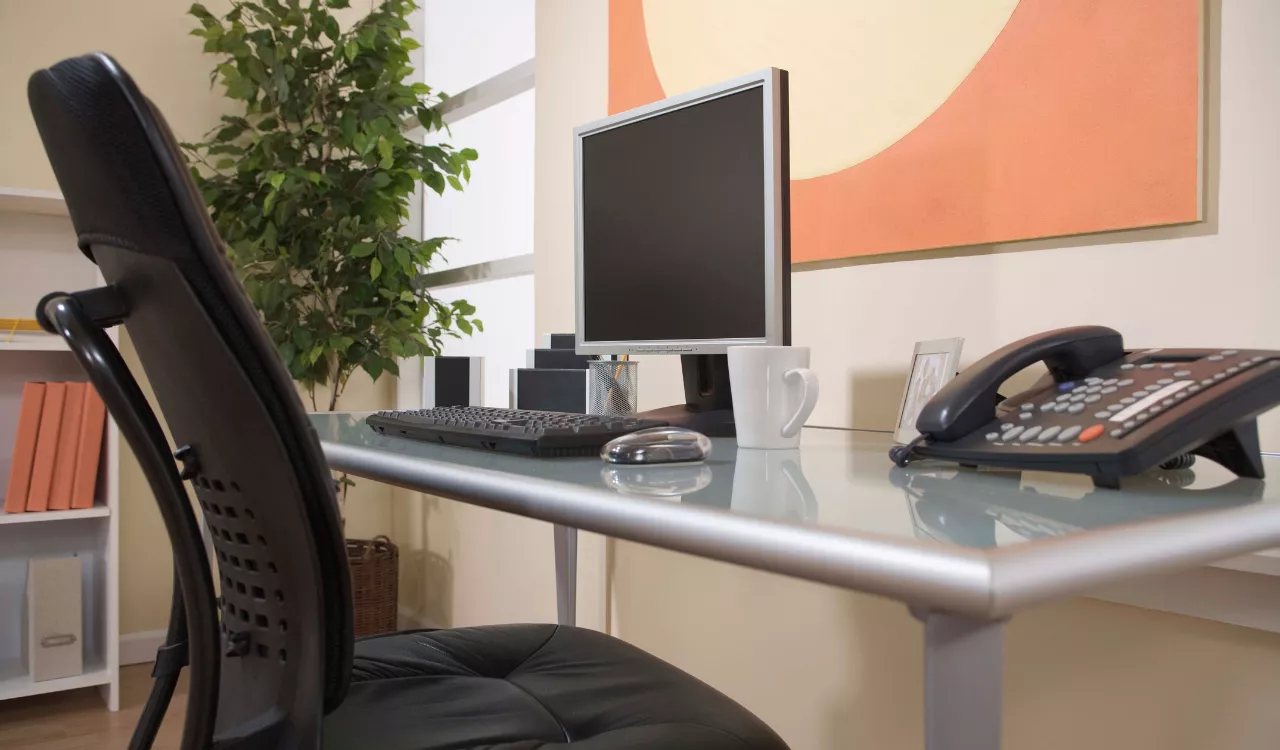
The best small office desks measure 36 to 48 inches wide and 20 to 24 inches deep, fitting comfortably in spaces as compact as 4 by 4 feet. Wall-mounted desks eliminate floor footprint entirely, corner desks transform unused angles into functional workstations, and compact desks with vertical storage provide organization without spreading outward. For extremely tight spaces, folding desks and desktop converters create temporary workstations that disappear when not in use.
Finding the right desk for a small space requires balancing work surface area against available room. This guide covers the best small desk options with specific measurements, space requirements, and practical tips to help you create a functional workspace in limited square footage.
What Size Desk Fits a Small Office or Home Workspace?
Understanding desk dimensions helps you find the right fit for your available space.
Compact desks (36 to 42 inches wide) are the smallest practical size for computer work. This width accommodates a laptop or single monitor with minimal additional workspace. Depth of 18 to 22 inches provides room for a keyboard and mouse. These desks fit spaces as small as 4 by 4 feet when allowing for a chair.
Small standard desks (44 to 48 inches wide) offer slightly more work surface while remaining space-efficient. This size fits a monitor plus some desk space for writing or reference materials. Depth of 22 to 24 inches provides a comfortable working room. Plan for a space of approximately 5 by 5 feet.
Narrow profile desks (any width, 18 to 20 inches deep) sacrifice depth to minimize how far the desk projects into the room. These work well along walls in narrow spaces like hallways or galley-style rooms. The reduced depth limits what you can place on the desk, but keeps pathways clear.
Beyond the desk itself, account for chair space. A desk chair needs 24 to 30 inches of clearance behind the desk for sitting and rolling. Add this to the desk depth when measuring your available space. A 24-inch deep desk actually requires about 50 to 54 inches of total room depth.
Wall-Mounted and Floating Desk Options
Wall-mounted desks attach directly to the wall, eliminating legs and freeing up floor space below. This makes small rooms feel more open and allows storage underneath.
Floating desk shelves are the simplest option. A single shelf mounted at desk height (28 to 30 inches) provides a work surface. These work best for laptop use or writing. Standard floating desk shelves range from 36 to 48 inches wide and 12 to 20 inches deep.
Wall-mounted fold-down desks provide a work surface when needed and fold flat against the wall when not in use. These are ideal for multi-purpose rooms where you need the floor space back after work hours. Quality fold-down desks include a locking mechanism to keep the surface stable while working.
Wall-mounted desks with storage combine a work surface with shelving or cubbies above. This vertical approach maximizes storage without expanding the footprint. Look for designs that include cable management if you plan to use a computer.
Installation requirements vary by design. Simple floating shelves need studs or heavy-duty wall anchors. Fold-down desks with any significant weight capacity require mounting into studs. Consider weight limits carefully, as wall-mounted desks typically support 50 to 100 pounds, less than freestanding desks.
Wall-mounted desks work best in spaces where floor area is at a premium, but wall space is available. They are less suitable for renters who cannot modify walls or for spaces with limited unobstructed wall area.
Corner Desks That Maximize Unused Space
Corners are often wasted space in small rooms. A corner desk transforms this dead zone into a functional workstation without encroaching on the main floor area.
L-shaped corner desks fit into a 90-degree corner with two work surfaces meeting at the angle. Compact L-shaped desks measure as small as 40 by 40 inches (each leg of the L) and provide a substantial work area in the corner footprint. The two surfaces let you separate tasks, such as computer work on one side and paperwork on the other.
Triangle corner desks are designed specifically for corner placement with a triangular or curved front edge. These take up less room than L-shaped desks but provide less work surface. They fit corners where an L shape would project too far into the room.
Corner wall-mounted desks combine corner placement with wall mounting for maximum space efficiency. These float in the corner with no legs, keeping the floor completely clear.
When measuring for a corner desk, check that doors, closets, and traffic paths remain clear with the desk in place. Corners near doors may not work because the desk blocks the door swing or creates awkward traffic flow. The best corners for desks are away from high-traffic areas.
Corner placement affects lighting and electrical access. Corners are often farther from windows, so plan for task lighting. Check outlet locations before committing to a corner, as you may need extension cords or additional outlets installed.
Compact Desks with Built-In Storage
When floor space is limited, building storage into the desk prevents the need for separate filing cabinets and shelving units that consume additional room.
Desks with hutches add vertical storage above the work surface. A hutch provides shelving, cubbies, or small cabinets without expanding the desk footprint. This is one of the most space-efficient storage solutions because it uses vertical space that would otherwise go unused.
Desks with built-in drawers include file drawers, box drawers, or both in the desk structure. A desk with a pedestal of drawers on one side provides substantial storage. Compact models keep the overall width reasonable while still offering organized storage.
Ladder desks lean against the wall like a ladder, combining a work surface with shelving tiers above and sometimes below. The footprint is minimal because the desk leans rather than standing on four legs. Ladder desks work well for light use, like laptop work or studying.
Secretary desks are a traditional design with a fold-down writing surface and enclosed storage. When closed, they look like a cabinet or chest. When open, they provide a compact workspace. Modern secretary desks are updated with features like keyboard trays and cable management.
Prioritize storage for items you use daily and need to reach within reach. Papers, supplies, and reference materials that you access frequently belong in desk storage. Items used less often can go elsewhere, preventing desk storage from becoming cluttered.
Folding and Convertible Desks for Multi-Use Rooms
When a room serves multiple purposes, a permanent desk may not make sense. Folding and convertible desks provide workspace when needed and disappear when the room returns to other uses.
Folding tables as desks are the simplest solution. A quality folding table with a 4-foot top provides an adequate work surface and stores flat against a wall or in a closet. This approach costs less than dedicated folding desk furniture and works well for occasional use.
Wall-mounted fold-down desks attach to the wall and fold up when not in use. Higher quality versions include storage that remains accessible when the desk is folded. Some designs fold into the wall like a Murphy bed, leaving no visible desk hardware when closed.
Convertible furniture serves dual purposes. A console table can work as both entryway furniture and a desk. A dining table in a studio apartment doubles as a workspace during the day. When choosing convertible pieces, consider height, as dining tables at 30 inches are slightly higher than the standard desk height of 28 to 29 inches.
Desktop converters turn any table or surface into a desk workstation. If you have a dining table, counter, or other surface at roughly desk height, a converter adds a proper keyboard and monitor setup. When work is done, the converter stores away, and the surface returns to its original purpose.
Folding desks work best for people who do not need a permanent, dedicated workspace. If you work from home full-time, the daily setup and takedown become tedious. If you work occasionally or need a desk for specific tasks, folding options preserve room flexibility.
Small Standing Desk Options for Tight Spaces
Standing desks are not just for large offices. Compact sit-stand options bring ergonomic benefits to small spaces.
Small electric sit-stand desks are available in widths starting at 42 to 48 inches. These provide full height adjustability in a compact footprint. Look for models with single-leg or T-leg bases that minimize floor space compared to dual-leg designs.
Desktop converters sit on an existing desk or table and raise your keyboard and monitor to standing height. These are ideal for small spaces because they require no additional floor area beyond your current desk. Compact converters measure as small as 28 to 32 inches wide.
Wall-mounted sit-stand desks combine wall mounting with height adjustability. These free up floor space while still allowing position changes throughout the day. Installation is more complex than standard wall-mounted desks due to the adjustment mechanism.
Standing desk mats become important in small spaces where you may stand in one position without room to move around. An anti-fatigue mat reduces leg and foot strain. Choose a mat that fits your standing area without creating a tripping hazard in tight quarters.
Consider the raised height clearance when planning a standing desk in a small space. At standing height, the desk surface reaches 42 to 48 inches. Ensure overhead shelving, cabinets, or sloped ceilings do not interfere with the raised position.
How to Make a Small Desk Feel More Spacious
Even with a limited surface area, smart organization and accessories help a small desk function well.
Monitor arms mount your screen to the desk edge or wall, freeing the surface area the monitor base would occupy. A monitor arm reclaims 8 to 12 inches of depth that would otherwise hold the monitor stand. For small desks, this recovered space makes a noticeable difference.
Vertical organization uses wall space and desk height rather than desk surface. Pegboards, wall-mounted file holders, and floating shelves above the desk keep supplies accessible without cluttering the work surface.
Under-desk storage takes advantage of the space below the work surface. Rolling carts, small filing cabinets, and storage bins fit underneath while keeping the desktop clear. Choose pieces that do not block leg room.
Cable management prevents cord clutter from consuming visible desk space. Route cables behind the desk or through cable trays mounted underneath. Wireless peripherals reduce cable count further.
Minimal desktop approach keeps only current task items on the desk surface. Store everything else in drawers, on shelves, or elsewhere. A clear desktop feels larger and allows focused work.
Lighting affects how spacious a desk feels. Task lighting illuminates the work area without requiring desk lamps that consume surface area. Under-cabinet lights, clip-on lights, or wall-mounted fixtures keep the desk itself clear.
Small Desk Options for Commercial Offices
Business settings have different requirements than home offices. Durability, professional appearance, and integration with office systems matter.
Compact commercial desks from office furniture manufacturers offer smaller sizes designed for tight office footprints. These desks use commercial-grade materials that withstand daily professional use better than residential furniture. Typical compact commercial desks measure 48 by 24 inches or 42 by 24 inches.
Benching systems in small configurations provide individual workstations within a shared desk structure. A 2-person bench in a back-to-back configuration can fit in less space than two separate desks while providing professional workspace for both employees.
Compact reception desks serve businesses that need a front desk presence but lack space for a full reception station. Smaller reception desks measure 48 to 60 inches wide and include transaction counters and modest storage.
Training room furniture often needs to fit many desks in a limited space. Narrow tables of 18 to 24 inches deep and 48 to 60 inches wide accommodate training setups where space is tight. Flip-top or folding designs allow the room to convert to other uses.
Commercial furniture typically costs more than residential alternatives but offers better durability, warranty coverage, and configuration options. For business applications, the investment usually pays off through longer service life.
How Much Do Small Desks Cost?
Budget expectations vary by desk type, materials, and quality level.
Budget small desks from mass market retailers cost $50 to $200. These include basic folding tables, simple writing desks, and entry-level compact desks. Quality and durability vary significantly at this price point. Budget desks work for light use or temporary needs.
Mid-range small desks cost $200 to $600 and offer better construction, more features, and improved appearance. This range includes solid small desks from furniture brands, basic wall-mounted options, and entry-level sit-stand converters. For daily home office use, this range provides good value.
Higher-end small desks cost $600 to $1,500 and include commercial-grade compact desks, quality sit-stand small desks, and designer pieces. Better materials, superior construction, and longer warranties justify the higher price for demanding use.
Wall-mounted and built-in desks vary widely based on complexity. Simple floating shelves cost $50 to $150. Quality fold-down wall desks run $200 to $500. Custom-built desks installed by contractors can cost $1,000 or more, depending on specifications.
Sit-stand small desks add $200 to $500 to the cost of a comparable fixed-height desk. Electric adjustment commands a premium over manual adjustment. Quality sit-stand desks in small sizes start around $400 and range up to $1,200 for premium models.
Factor in accessories when budgeting. A monitor arm ($50 to $200), task lighting ($30 to $100), and organization accessories ($50 to $150) add to the total investment in your small workspace.
Rochester Office Interiors: Small Space Desk Solutions
Rochester Office Interiors has helped businesses and home offices throughout Rochester, NY, and across the United States solve workspace challenges for over 30 years. We understand that not every office has unlimited space, and we specialize in finding solutions that work within real-world constraints.
Our selection includes compact desks, corner workstations, and small footprint options from commercial furniture manufacturers. We carry products designed for durability and daily professional use, not just residential aesthetics.
Our complimentary consultation process helps you evaluate your space and requirements before purchasing. We measure available areas, discuss work patterns, and recommend options that genuinely fit rather than pushing oversized furniture into undersized spaces.
For businesses with multiple small offices or tight floor plans, we provide space planning services that maximize employee capacity while maintaining functional workstations. Our design team creates floor plans showing how furniture fits before you commit to purchases.
Contact Rochester Office Interiors today to schedule your free consultation and find the right desk solution for your small space.
Frequently Asked Questions
What is the smallest functional desk size for computer work?
The smallest practical desk for computer work measures approximately 36 inches wide by 20 inches deep. This accommodates a laptop or single monitor with a keyboard and mouse. Anything smaller becomes frustrating for regular use. If you need dual monitors or an additional work surface, plan for at least 42 to 48 inches of width.
Can I fit a desk in a closet?
Yes, closets can convert to functional desk nooks if they measure at least 36 inches wide and 24 inches deep. Remove the closet door or replace it with curtains for easier access. Add a desk surface at 28 to 30 inches in height, task lighting, and an outlet if one does not exist. Ventilation can be an issue in enclosed closets, so consider leaving the door open during work or adding a small fan.
How much space do I need around a small desk?
Plan for 24 to 30 inches of clearance behind the desk for chair movement. Side clearance of 12 to 18 inches allows comfortable access to the chair. In front of the desk, maintain clear pathways of at least 36 inches for traffic flow. A desk in a 4 by 4 foot space works, but feels tight. A 5-by-5-foot space is more comfortable for a small desk setup.
Are small desks comfortable for all-day work?
Small desks can be comfortable for all-day work if properly set up. The key factors are desk height (28 to 30 inches for most people), monitor position (eye level, arm’s length away), and chair quality. A small desk with a good ergonomic setup is more comfortable than a large desk with poor positioning. However, very small desks with cramped surfaces can cause strain if you constantly reach for items or work in awkward positions.